Smooth Writing Promo Pens: The Ultimate Guide to Quality & ROI
A potential client struggles with a cheap, scratchy ballpoint pen that skips every other letter. If that pen has your logo, you are handing them a poor experience. Your brand should represent quality and reliability. The right ink and tip matter more than you think. Let's discuss how to select promotional pens that write as well as they look.
Key Takeaways:
- A smooth pen is kept and used, associating your brand with a positive, frictionless experience. A scratchy pen that skips is thrown away, along with your marketing investment.
- High-quality promotional items signal competence and attention to detail. A pen that feels cheap or writes poorly suggests your business cuts corners.
- Return on investment comes from longevity. Spending slightly more on a quality pen that a client uses for months delivers thousands of brand impressions, offering a far better return than a cheap pen that is immediately discarded.
- A pen with a superior writing experience often gets borrowed or "stolen" by colleagues and friends. This expands your brand's reach to a new audience at no extra cost.
- Comfort is critical for retention. A pen with a comfortable grip and balanced weight, combined with smooth-flowing ink, becomes a preferred writing tool, increasing its daily use and your brand's visibility.
Why Cheap Pens Are a Bad Idea
You have experienced it. At a counter or a trade show booth, you try to sign a document and the ink stops. You shake the pen and scribble in the margin, but only get the scratchy sound of dry metal on paper. Now, imagine that frustrating piece of plastic has your logo on the side. You have just associated your business with failure.
Cheap manufacturing often means low-viscosity ink that dries out or ballpoints that jam. When you choose the lowest-tier option to save a few cents per unit, you are gambling with user experience. Most people will not blame the pen manufacturer; they will subconsciously blame the brand on the barrel.
What Does That Say About Your Brand?
If you hand someone a pen that feels like it might snap, you are sending a clear message about your quality standards. You spend resources on your website, marketing, and product development to communicate quality, only to undermine it with a ten-cent giveaway that communicates the opposite.
If the clicker sticks or the clip breaks, that reflects on you.
You are telling your customer that you cut corners. You imply that you will opt for the budget solution rather than the one that works. In the split second it takes for a pen to fail, consumer trust disappears.
The Reality of the Promo Pen "Trash" Factor
Nobody keeps junk. We all have a drawer for good pens and another for bad writing instruments that are eventually thrown out. Statistics suggest the average promotional writing instrument is kept for about nine months, but that number drops if the writing experience is poor. You are not paying for impressions if the item ends up in a landfill.
You want your brand to live on their desk, not in their wastebasket. When you buy the cheapest bulk option, you are paying for a direct-to-trash service. It is a waste of your marketing budget and produces plastic that serves no purpose.
It is more cost-effective to buy fewer, higher-quality pens. If you spend $1.50 on a pen that someone uses daily for a year, your cost per impression is microscopic. Compare that to spending $0.30 on a pen that gets tossed after one use. A smooth-writing gel pen or a weighted metal barrel creates a sense of value that makes the recipient feel they received a gift, not a piece of marketing spam.
The Smooth Writing Experience: What It Feels Like
Why Smooth Pens Matter
When you sign a receipt and the pen digs into the paper, it is a small annoyance that you remember. That physical resistance, or high-friction drag, breaks your cognitive flow. When you hand a client a promo pen that glides effortlessly, you tap into a psychological concept known as "processing fluency." If the physical act of writing feels easy, the brain decides the task is easier, and by extension, that working with your brand is a smooth experience.
A pen that requires a heavy hand causes fatigue. Ergonomic studies show this can happen within 10 minutes of continuous writing. This means your pen becomes the "good pen," the one people search for.
A Quick Note on Ink Technology
Smoothness often comes down to ink chemistry. Traditional ballpoints use thick, oil-based pastes with a viscosity of around 20,000 centipoise. This is why you must press down hard to get the ink flowing. Gel pens use a water-based gel with a much lower viscosity. For a deeper look into this technology, see our guide to the Top gel pens for smooth promotional writing in 2025.
Because the ink is water-based, it flows with less friction and soaks into paper fibers immediately. The ink uses shear-thinning properties. It is a semi-solid gel in the cartridge so it does not leak, but the friction of the ball rolling turns it into a liquid instantly. You get the safety of a ballpoint with the flow of a fountain pen.

Understanding High-Performance Gel Pens
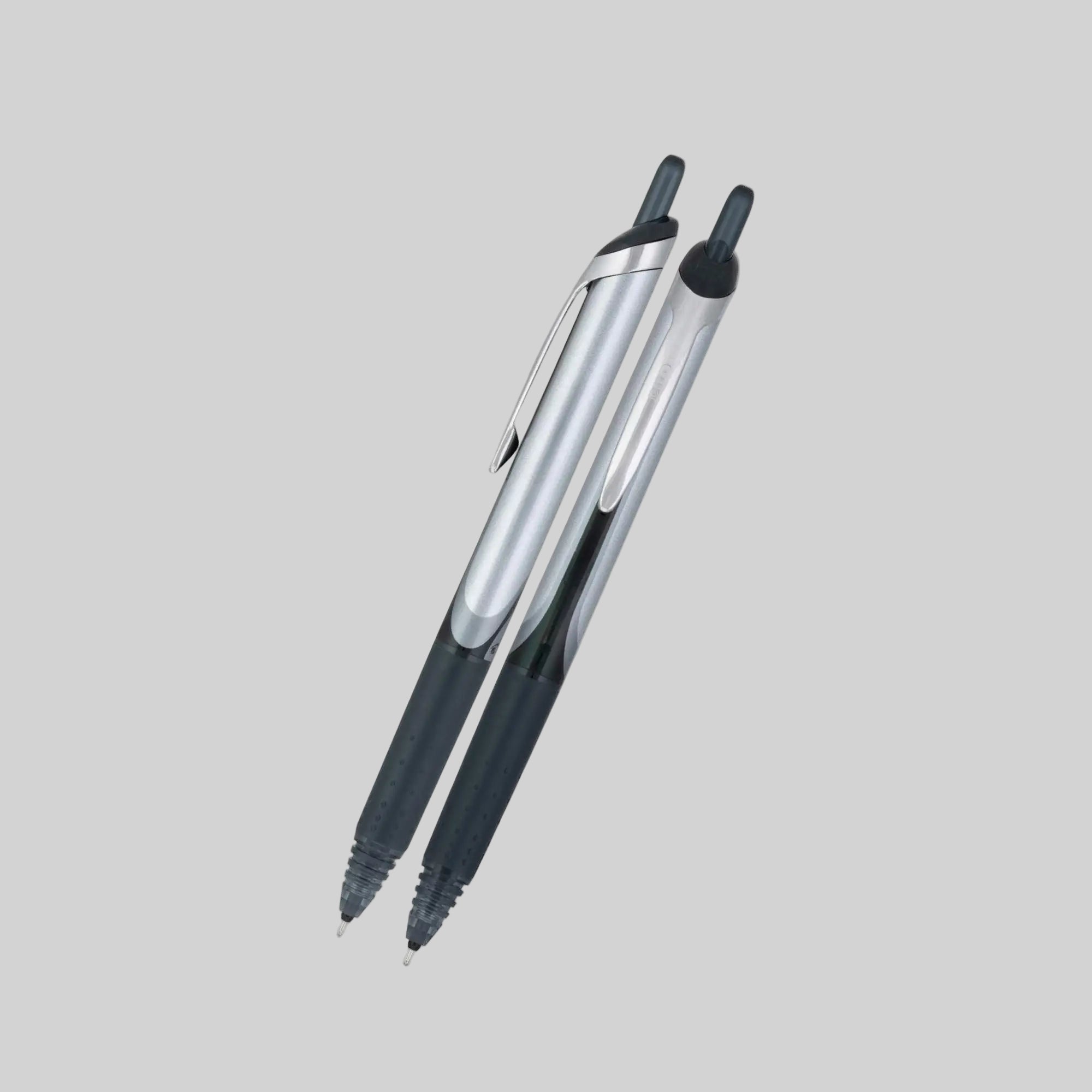
Some promotional items end up in the trash while others become permanent fixtures on a client's desk. A quality gel pen bridges the gap between a "cheap giveaway" and an "expensive corporate gift," giving you strong performance without impacting your budget. When you pick one up, it feels solid, well-balanced, and ready to work.
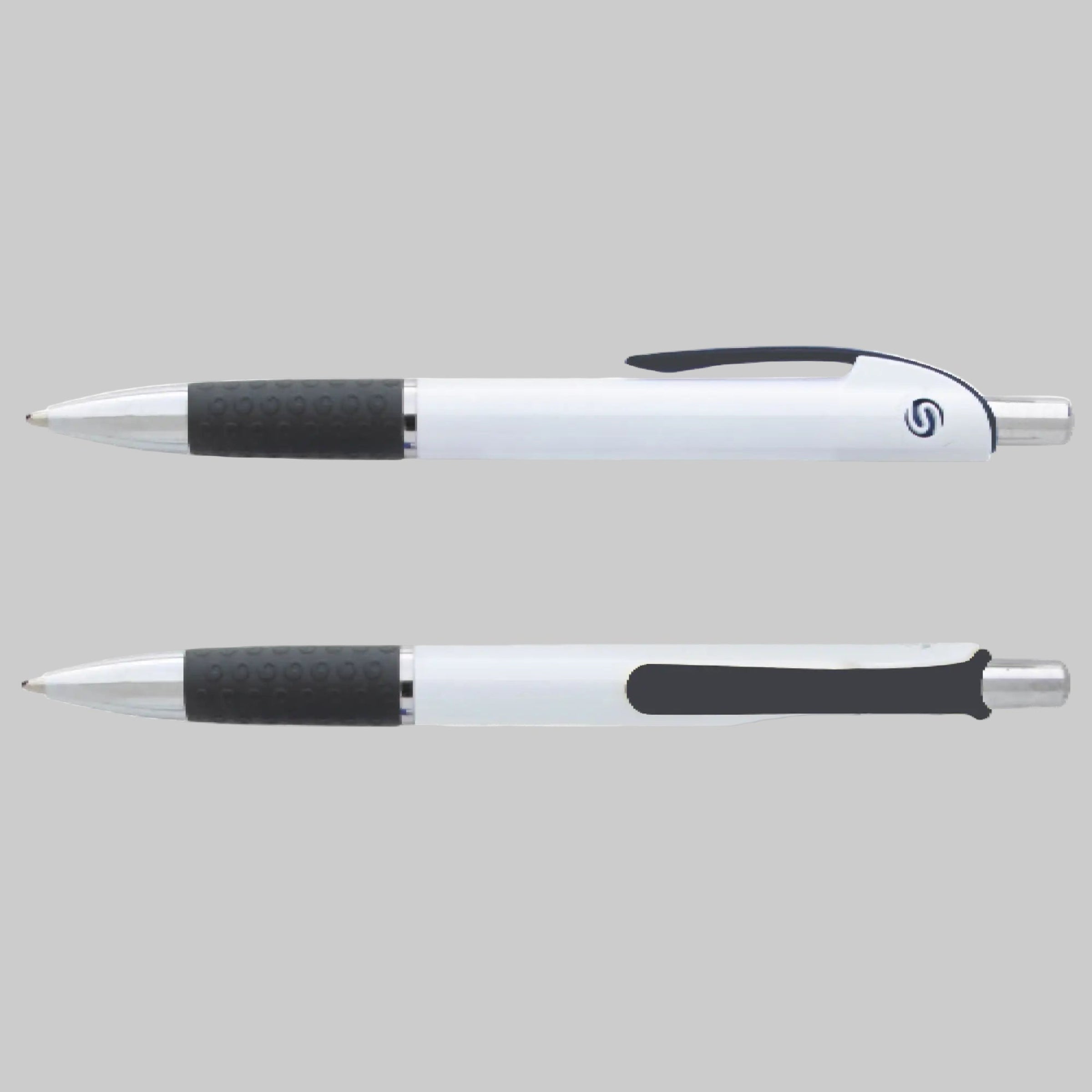
Many high-quality models feature smart design choices like an automatic clip-retracting mechanism. When you clip the pen to a pocket or notebook, the tip retracts automatically. This prevents ink stains on shirts or marks inside a bag, showing that you value functionality.
What Makes a Great Pen Shine
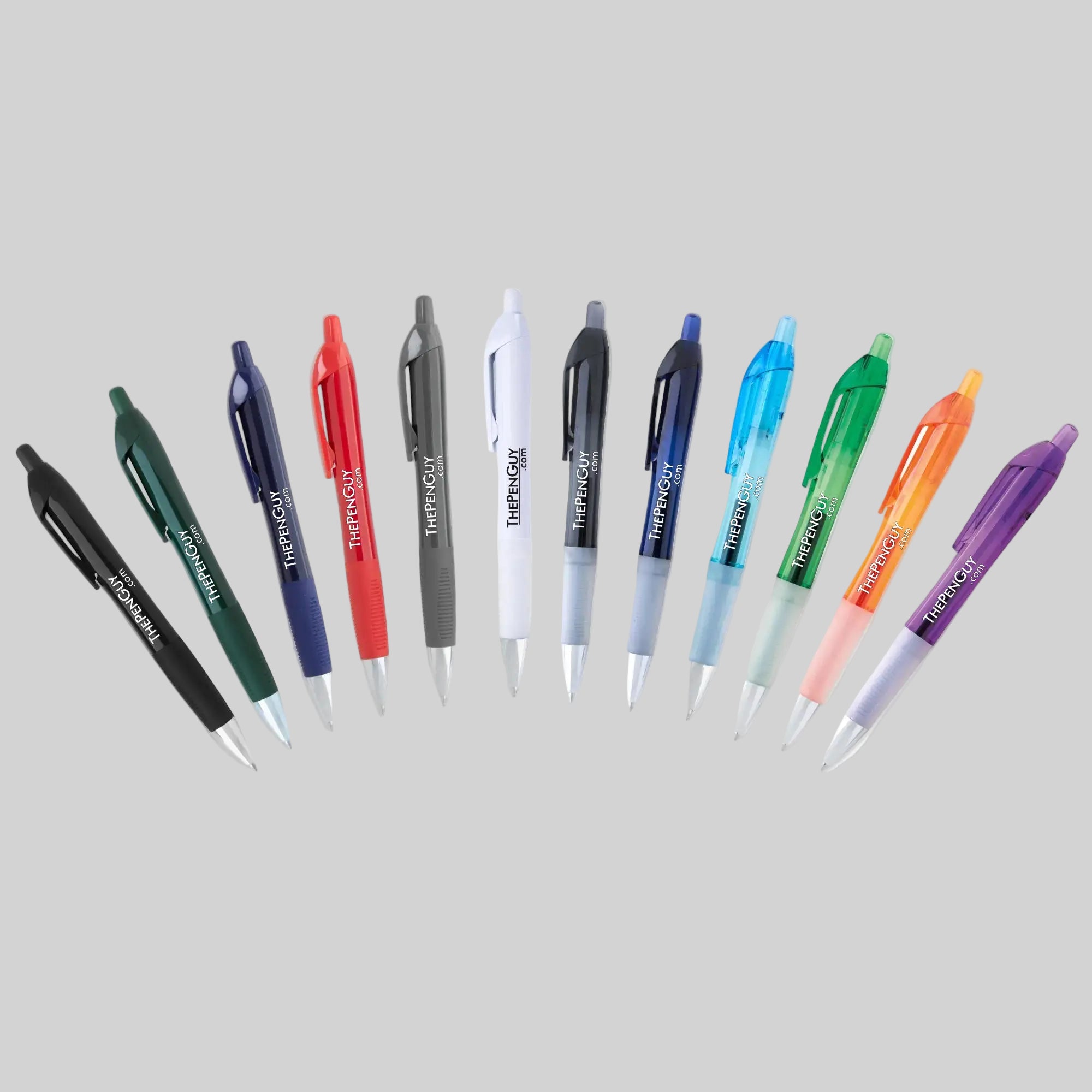
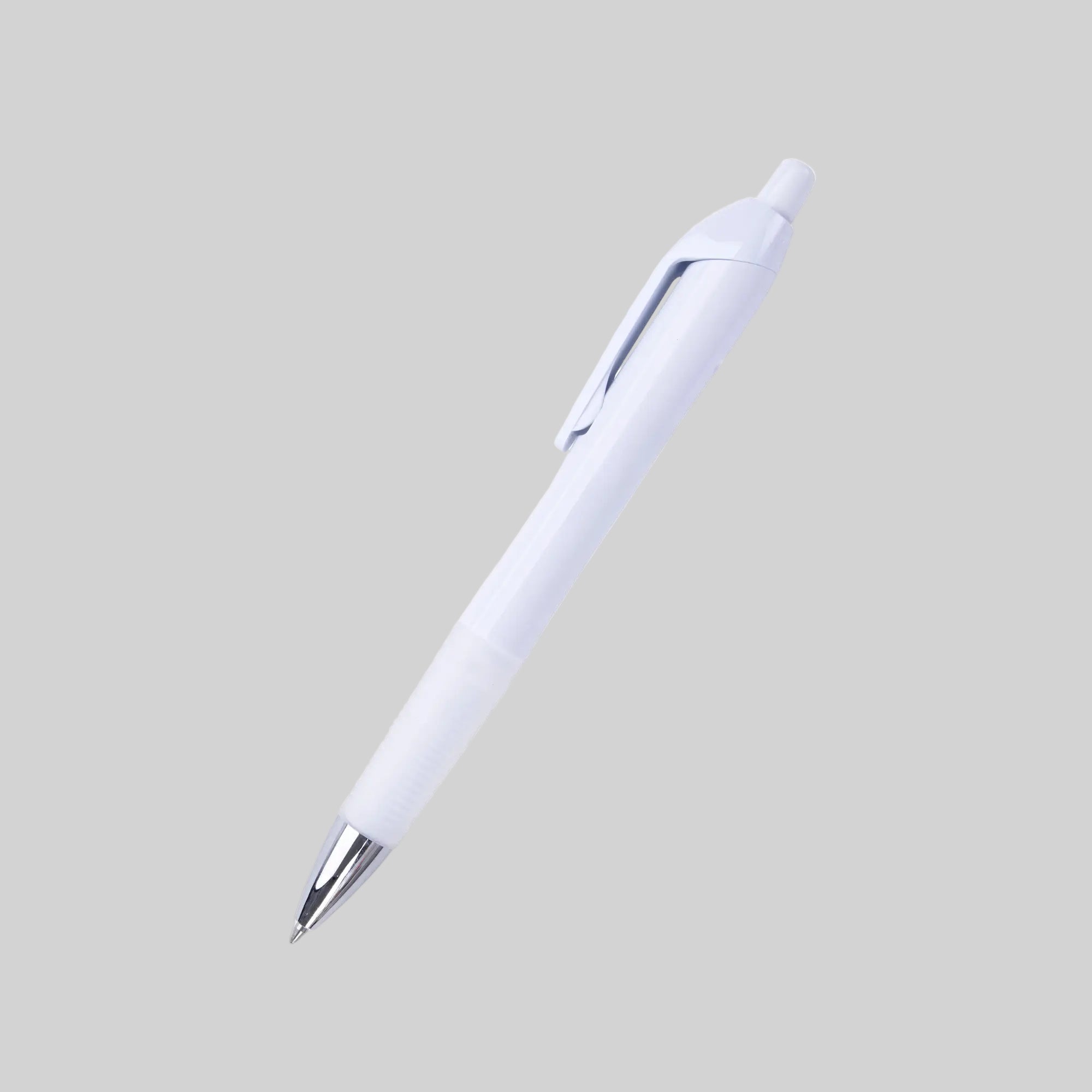
A quality pen has features you will appreciate. Look for a firm, textured rubberized grip integrated into the barrel design. It gives you total control over your writing. The translucent barrel colors are often deep and rich, which makes a white or silver logo imprint stand out.
The tip is the most important part. A bold 0.7mm point lays down a thick, confident line every time. There is no scratching, skipping, or priming the pen on scrap paper to get it started. It just flows.
The Reality of "No Smear" Ink
Dragging your hand through a freshly written sentence is frustrating, especially for left-handed individuals. While no liquid ink is perfect, many gel pens use a rapid-dry formula. The ink sets on the page very fast, usually within a second or two, which drastically reduces messy stains.
You can test this. Write a signature and run your finger over it. On standard copy paper, it stays put. It is reliable.
The type of paper does change the results. On glossy brochures or coated cards, you will need to give it a few extra seconds to dry since the liquid cannot absorb into the fibers. For everyday legal pads, sticky notes, and printer paper, the smear resistance is excellent, making it a safe bet for fast-paced work environments.
The Hidden Costs of Skimping on Pens
I watched a sales rep at a conference try to close a deal by handing over a branded stick pen to sign the paperwork. It scratched, skipped, and died, forcing him to search his bag for a replacement. That twenty-cent savings on the unit cost vanishes when your "gift" makes you look unreliable.
You are effectively paying to annoy your prospects.
Let’s Do the Math
Think about the last time you cleaned out your desk and tossed a handful of cracked, dried-out pens. The goal is to find cost-effective logo pens that write well in bulk, which provide tangible value over the long term.
Increasing the budget to $1.00 or $1.25 gets you a metal barrel or a hybrid ink refill that people keep. When you calculate longevity, spending more upfront actually drops your cost-per-use to pennies. It's the difference between an investment and a donation to the local dump.
How Many Impressions Are Your Cheap Pens Getting?
An industry stat claims a single promotional writing instrument generates about 3,000 impressions over its lifetime. That average relies on the pen functioning long enough to be seen. A scratchy plastic pen that runs out of ink after two pages is not getting you 3,000 impressions. It is getting you one frustrated user.
You want the pen that gets stolen. When you produce a smooth writer, it moves from your client's desk to their pocket, then to a meeting. Every time that pen changes hands because someone remarks on how well it writes, your logo gets prime exposure to a new audience.
Studies on promotional products show utility and quality are the top two reasons people keep items. "Keepers" are the only products generating real returns. If your logo is on a piece of junk, the only impression you leave is that your brand cuts corners. Your merchandise needs to survive the desk "purge," and only smooth writers make the cut.
Your Clients Will Actually Love These Pens
Most promotional items end up in the trash because nobody wants another cheap plastic stick that scratches paper. When you hand someone a pen that glides across the page, you are not just giving away a freebie. You are upgrading their daily work.
That tactile experience triggers an immediate appreciation that a flimsy budget ballpoint cannot match. Instead of tossing it, your client slips it into their pocket or bag because it feels valuable. Quality creates retention.
Why People Guard Their Favorite Pens
People in offices often get territorial over "the good pen." Psychologists might link this to the endowment effect, where we value things more simply because they are ours. The attachment is stronger when the tool works perfectly. Once your client realizes your branded pen is the smooth writer that does not cramp their hand, it stops being "swag" and starts being "my pen."
They will hide it to keep it safe from borrowers. That level of possessiveness is exactly where you want your brand to live: protected, valued, and used daily.
The "Accidental Theft" Factor
Getting your pens stolen is the highest compliment your marketing budget can receive. When a waiter, a bank teller, or a colleague "accidentally" pockets that smooth-writing pen, your logo just broke out of its initial distribution zone.
That wandering pen is going to grocery stores, parent-teacher conferences, and other business meetings, racking up views from people you never would have reached otherwise.
Industry data suggests a single high-quality writing instrument generates around 3,000 impressions over its lifetime. Accidental theft turns a modest investment into a mobile billboard that keeps working for you.
Design Matters: The Look of a Quality Pen
You can have the smoothest ink, but if the casing looks cheap, it will end up in a junk drawer. A quality pen should walk the line between a budget-friendly promo item and something from a stationery store. It should have a streamlined silhouette that feels balanced in your hand, not top-heavy or flimsy.
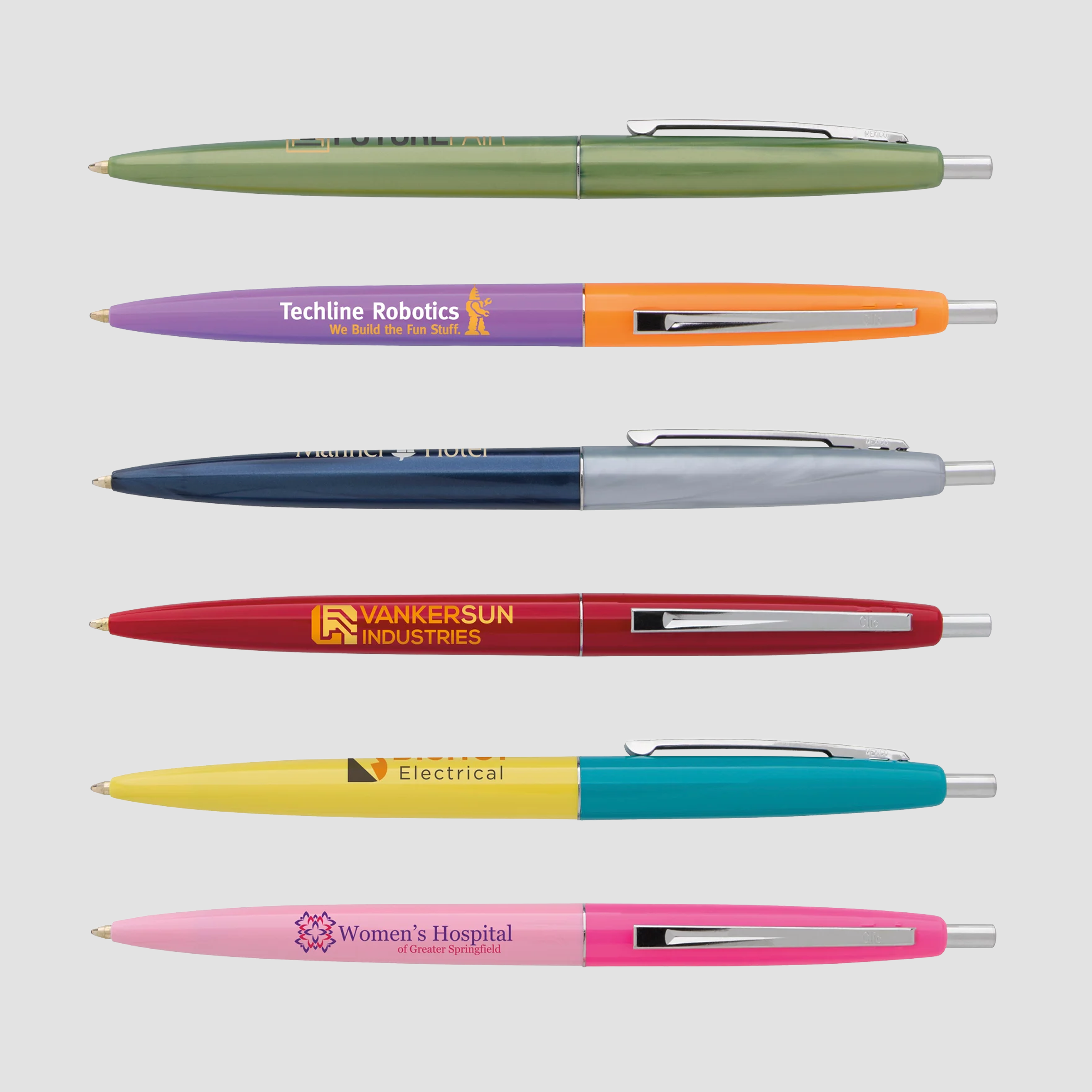
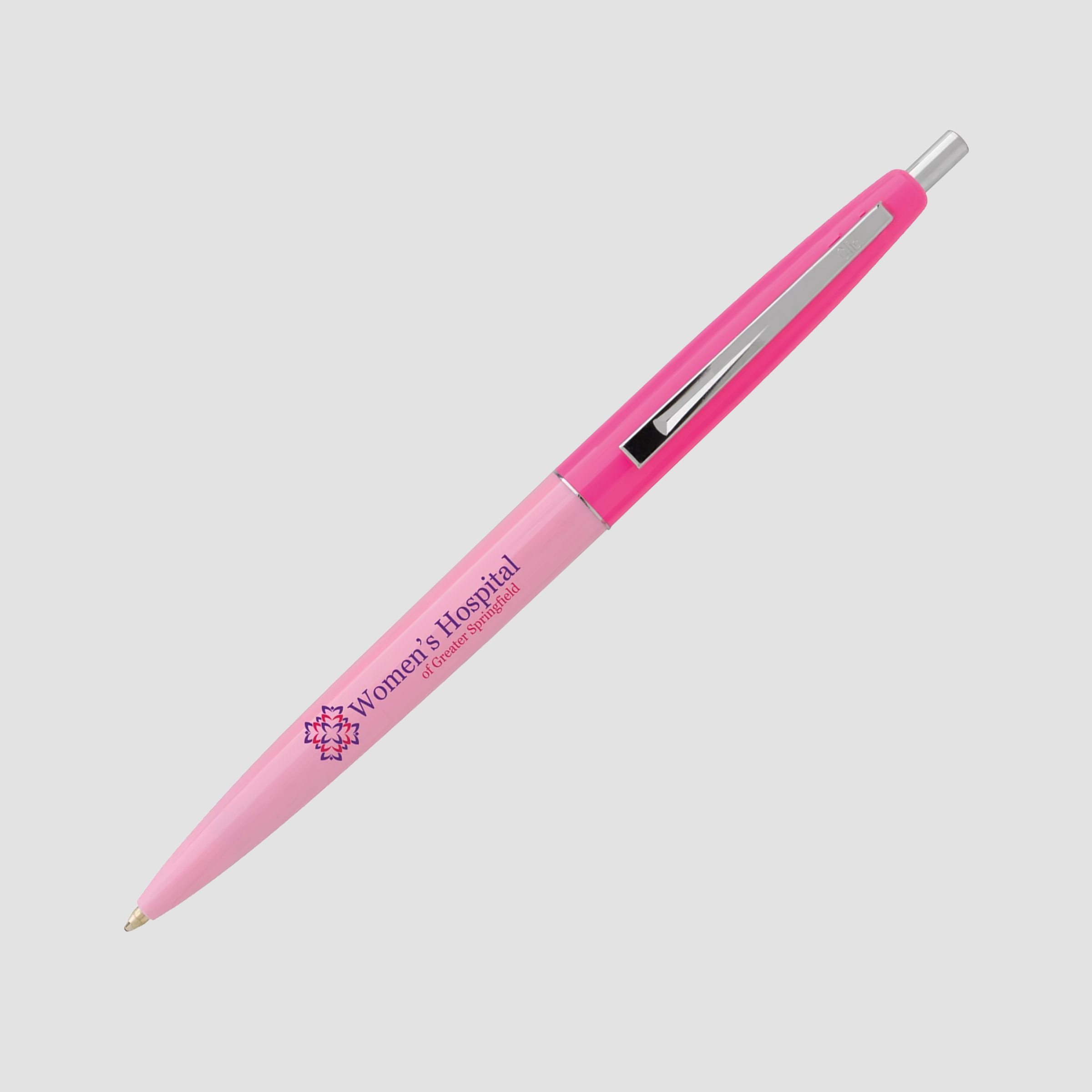
Chrome accents make a difference. Most plastic pens skip this to save money, but a metal ring near the tip and a shiny clip give it a professional edge. It signals to your client that you care about the details. The visual cue is quality before they even write.
Why Translucent Barrels Are Popular
Translucent barrels offer a modern, tech-forward aesthetic that solid plastics cannot match. It gives the pen depth. Instead of a flat block of color, you get a gem-like quality where light passes through the material, making the color appear more vibrant.
It also serves a practical purpose. You can see the ink supply. Nobody likes running out of ink mid-sentence, and the translucent body shows how much life is left in the cartridge. It is a subtle design choice that adds utility while making your logo stand out.
The Power of Color and Ink
Most people default to black ink, but your choice sends a subconscious signal. Black gel ink creates high contrast against white paper, which our brains interpret as authoritative and final. It is the color of contracts. A dark, solid black line subtly aligns your brand with precision and professionalism.
Blue ink triggers a different response. Historically used to distinguish original documents from photocopies, blue feels more personal and trustworthy. If your brand relies on building relationships, a blue ink option often feels friendlier.
The saturation level of gel ink also plays a role. Because gel suspends pigment in a water-based solution, the line is bolder and more opaque than standard ballpoint paste. A bold, uninterrupted line suggests confidence. When a customer uses your pen and sees a rich line flow onto the paper without skipping, they associate that reliability with your company.

The Importance of Writing Comfort
Most people treat pens as disposable until they have to sign fifty thank-you cards. That is when you realize a cheap plastic stick is your enemy. A comfortable pen disappears in your hand so you can focus on your thoughts, not the cramp in your thumb.
If you hand a client a pen that provides a negative sensation, that feeling gets linked to your brand. You want them to feel a smooth, effortless glide that makes writing less of a chore.
Ergonomics: Why Grip and Weight Count
Squeezing a skinny barrel causes hand fatigue. Good ergonomics usually means a slightly wider barrel, around 10mm to 12mm, combined with a rubberized or textured zone that helps with grip. It stops the slip, so your muscles can relax.
Balance is also important. A pen that is top-heavy feels awkward, while a featherweight plastic tube offers no feedback. You need a weight between 15 and 20 grams, where the pen rests in the crook of your hand and lets gravity assist your writing.
For Lefties and Righties
Left-handed individuals often struggle with ink smearing on the side of their palm. The solution is low-viscosity hybrid ink that dries in under a second upon hitting paper fibers.
You are not just buying pens for the 90% of the population that uses their right hand. Ignoring the other 10% means alienating part of your audience. When you choose a pen with instant-dry technology, you show your left-handed customers that you thought about them.
Because lefties "push" the pen across the page, they need a tip that will not scratch. Standard ballpoints often fail here. Smooth-writing hybrids use a reinforced tip housing that handles the pushing angle without digging into the paper, ensuring a solid line.
What’s the Ideal Imprint for Your Brand?
Making Your Logo Pop: Size and Placement
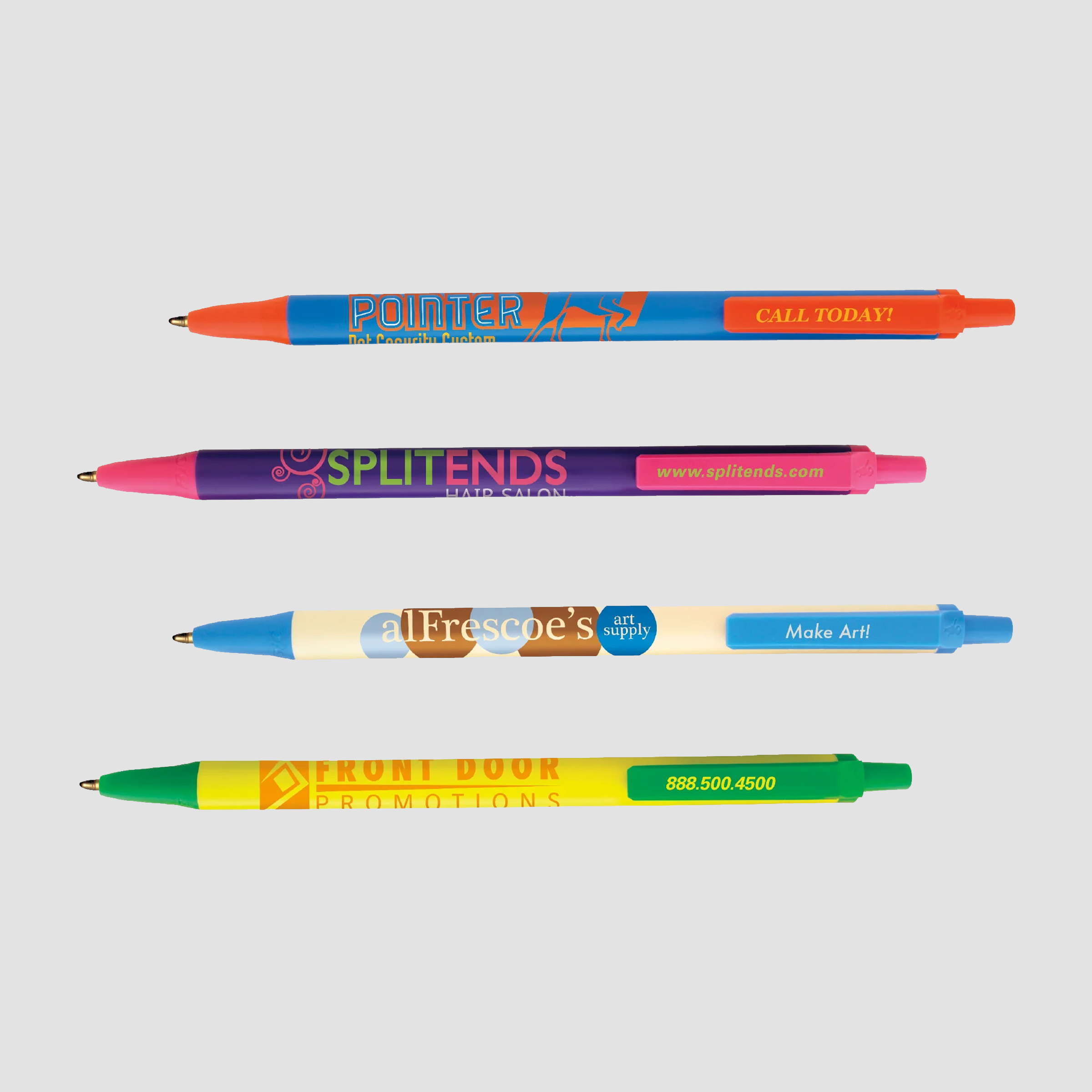
Some logos look like a blurry smudge while others catch your eye. It comes down to respecting the small imprint area. A standard barrel gives you about 1.5 inches wide by 0.75 inches high. Trying to squeeze in your tagline, website, phone number, and an intricate logo is a mistake. Keep it simple. You want high-contrast vector art that scales down without losing definition.
Do not just default to the side of the barrel. Consider these options to maximize visibility:
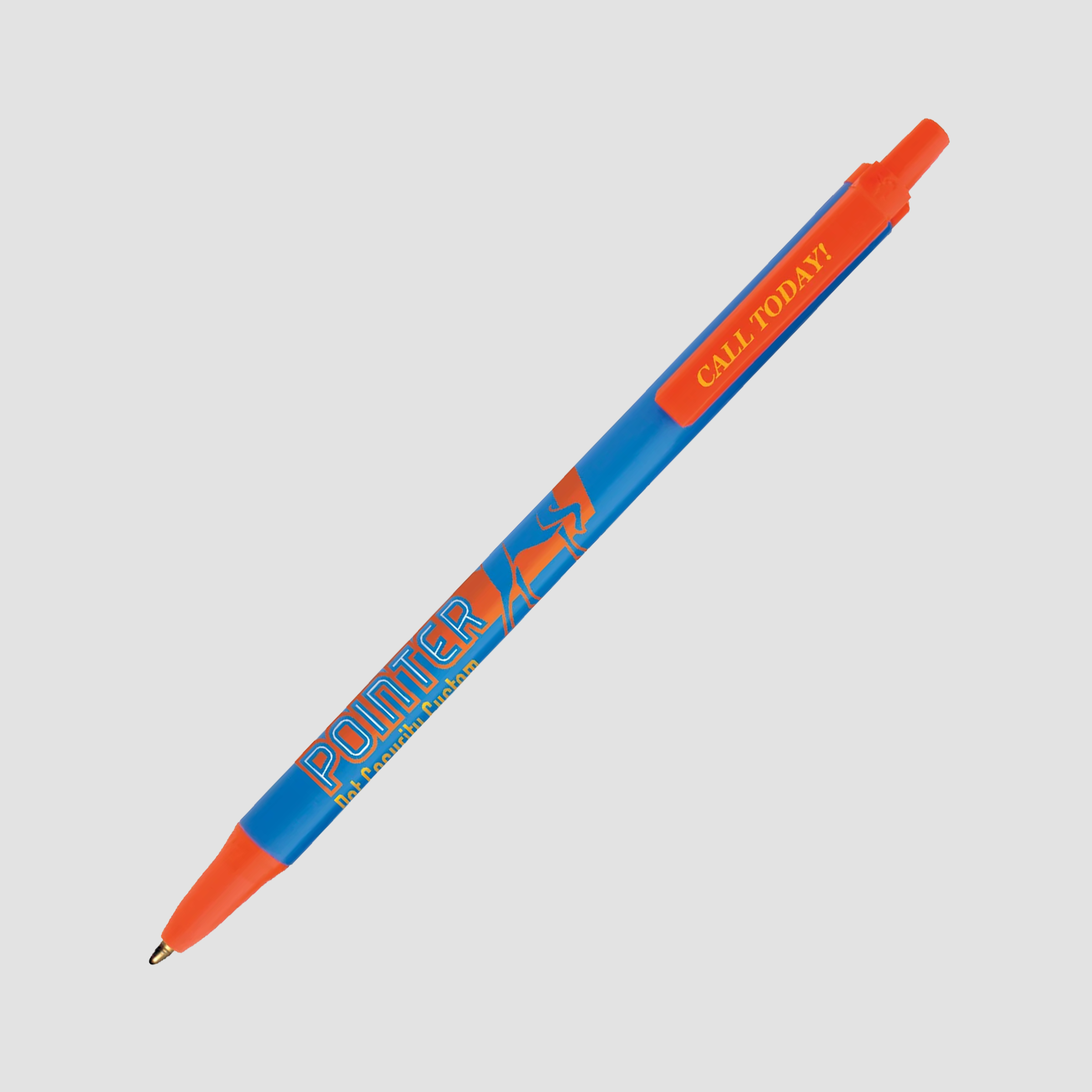
- Opt for rotary printing for a wraparound design that uses the full circumference.
- Use the clip for a secondary imprint, perfect for a website URL.
- Choose laser engraving for metal pens to ensure the branding lasts as long as the ink.
The goal is recognition, not a reading test.
Clever Slogans: Keep It Short
Is your tagline readable? You must be ruthless with your character count. Most stick pens can only handle about 25 to 30 characters before the text becomes distorted. If your company motto is a full paragraph, shorten it or remove it for the pen project.
Stick to clean, sans-serif fonts like Arial or Helvetica that remain legible at small sizes. Script fonts look fancy on business cards but often turn into an illegible scratch on a plastic tube. You are better off with a bold URL or a two-word punch like "We Deliver."
Sometimes the smartest move is just putting your domain name in bold caps and letting your website do the heavy lifting.
The Longevity Factor: How Long Should Your Pens Last?
Expectation vs. Reality
A standard ballpoint has a write-out length of about 900 to 1,200 meters. Bottom-of-the-barrel plastic pens might only give you 400 meters. It is a noticeable drop in quality that your clients will feel, and it reflects directly on your brand. When you opt for higher-quality pens, you are usually getting a tungsten carbide ball and better viscosity ink that pushes the lifespan closer to two kilometers, ensuring your name stays on their desk for months.
You have to ask if saving a few cents per unit is worth the frustration of a pen that fails. Quality is also about shelf life. A decent promo pen should sit in storage for two years and still write immediately. Cheaper oil-based inks tend to dry out, turning your marketing inventory into useless plastic.
Understanding Pen Lifespan
Most pens do not run out of ink before they are lost or tossed. Industry data suggests the average promotional pen stays around for six to nine months. You are not just battling ink capacity; you are battling the durability of the clip and click mechanism. If the spring jams or the clip snaps, the pen is hitting the garbage.
If the pen writes incredibly smoothly, your client will guard it and use it until it is empty. We have all had a favorite pen we panic about losing. That is the status you want your merchandise to achieve. When a pen feels premium and writes without drag, the user lifespan extends because they keep track of it.
Think about the cost per impression. If you spend a dollar on a pen that lasts a year, your cost per impression is fractions of a penny. Compare that to a thirty-cent pen that stops working after two weeks. You have lost hundreds of potential brand impressions and likely annoyed the user.
The User Experience: Why a Great Pen Gets Kept
The difference between a bad pen and a great one is the difference between dragging a nail across paper and gliding on ice. You are not just writing a list; you are experiencing a tactile satisfaction that makes you want to write more. The specific weight and flow can turn a mundane task into something enjoyable.
You might not think you care about ink viscosity until your hand does not cramp up after three pages of notes because you did not have to press down hard. A great pen does the work for you, laying down a bold, consistent line that makes even messy handwriting look intentional.
Real-Life Uses
When you need to sign a credit card slip and the waiter hands you a pen that barely works, it is an annoyance. Now imagine pulling out a quality pen instead. You get a clean, dark signature that does not skip. There is a genuine sense of relief in that consistency. It is perfect for high-pressure quick notes, like when you are on a call and need to capture information instantly.
Journaling or brainstorming sessions are where you will really notice the quality. Because the ink flows freely, your thoughts are not bottlenecked by the physical act of writing. Ideas can spill onto the page as fast as you can think them.
What Others Are Saying
Hand these out at a trade show and you will hear the same feedback: "Where did you get this?" and "Can I take two?" It is common for high-quality pens to be the most "stolen" item in an office, not out of malice, but because people refuse to give them back.
One client at The Pen Guy reported they had to start keeping their supply in a locked cabinet because the front desk jar was emptying daily. That is the kind of problem you want. When people are hoarding your branded merchandise, you have found a sweet spot of utility and quality.
The praise is long-lasting. You will have clients mention the pen six months later because it is still on their desk and working perfectly. That retention is rare for promotional products.
Upselling and Cross-Promotions with Pens
Imagine you are buying a leather-bound journal. At the counter, the cashier points to a sleek, soft-touch pen and asks if you need something reliable for your first entry. That is the classic upsell. It works because the logic is sound.
If someone is investing in a premium surface to write on, they will not want to ruin it with a scratchy disposable. By positioning your branded pens as a necessary companion to your main products, you are solving a problem at the point of sale.
How to Bundle with Other Merch
Think about "New Hire Welcome Kits" with a hoodie, water bottle, and stickers. The pen is rarely the star, but the package feels incomplete without it. You can create "Conference Survival Packs" where a branded notebook is shrink-wrapped with a high-quality gel pen. This forces distribution into the hands of people who might have walked past a loose jar of them.
Bundling turns a singular item into a curated experience. If you run a real estate agency, pair a house-shaped stress ball with a metal pen for potential sellers. The stress ball grabs attention, but the pen stays on the desk for signing contracts later. It creates a psychological link between your brand and preparedness.
The Benefits of a Well-Rounded Promo Strategy
Relying on a single type of merchandise is limiting. A diverse promotional strategy ensures you are hitting different touchpoints. While a t-shirt might be worn once a week, a high-quality pen sits on a desk and gets used multiple times a day, offering a frequency of brand exposure that apparel cannot match.
PPAI studies show that writing instruments are kept for an average of nine months. When you combine that with other items, like a coffee mug, you surround your client with your brand presence. You create an ecosystem where your logo becomes a familiar fixture in their daily routine.
Consider the financial side. When you balance higher-cost items with cost-effective pens, you lower your overall Cost Per Impression (CPI). A pen that costs a dollar might generate 3,000 impressions, costing fractions of a penny per view. Mixing these high-frequency, low-cost items into your strategy stretches your marketing budget.

When to Use Smooth Writing Pens Over Other Merch
Special Occasions
For high-stakes situations, basic utility is not enough. You would not hand a partner a cheap plastic clicker to sign a merger agreement. High-end, smooth-writing pens with hybrid ink or a weighted brass barrel are built for these moments. They add a sense of gravity to the occasion.
If you are hosting a gala or an executive retreat, the gift's tactile experience needs to match the event's exclusivity. A pen that glides effortlessly feels like a luxury item. You are not just giving a tool; you are giving a premium experience that associates your brand with quality.
Everyday Giveaways
A single writing instrument generates roughly 3,000 impressions, driving the cost-per-impression down to less than 1/10th of a cent. This is a level of marketing efficiency digital ads struggle to match. You can afford to leave them at front desks, local diners, or inside every shopping bag. But they have to work well.
A pen that writes like butter gets "accidentally" pocketed and taken to new places. This turns your merchandise into a mobile billboard that travels for free. You want your brand on the pen people fight over.
When someone grabs your pen and the ink flows instantly, their brain registers a micro-moment of satisfaction. That positive feeling gets subconsciously linked to your logo. It implies your business is reliable, smooth, and hassle-free.
Your Ultimate Call to Action: Get a Sample!
Try Before You Buy
Ordering five thousand units based on a digital mockup is a gamble. You would not buy a car without a test drive, so do not spend your marketing budget on a writing instrument that might not perform. Most reputable distributors know that "hand feel" is everything. As a leading cost-effective smooth writing promotional pens supplier, The Pen Guy encourages you to test our products before committing to a large order.
When the sample arrives, put it to work. Carry it for a week, use it during long calls, and see if it skips. You need to know if the ink globs up or if the clip is durable. Testing the merchandise is smart business.
What You’ll Love About a Quality Pen
Hybrid ink technology is a game-changer. You get the vibrant color of a gel pen with the instant-drying reliability of a ballpoint. This provides a "glide" sensation without messy smudges that frustrate left-handed users. It is smooth, consistent, and feels more expensive than it is.
There is a psychological element at play. Because low-viscosity ink requires less pressure, your hand does not cramp as quickly. It is a subtle comfort factor that users notice immediately.
A 1.2mm bold point tip with a hybrid formula creates a line that commands attention. You are giving a reliable tool that clients will instinctively guard. That is exactly where you want your logo to be: in the hand of someone who refuses to let it go.
Final Thoughts
The gap between a pen that drags and one that flows is about reputation. Nobody keeps junk that skips. Those cheap sticks end up in a drawer or snapped in half. When you hand someone a smooth writer, you give them a tool they will guard because good pens are hard to find.
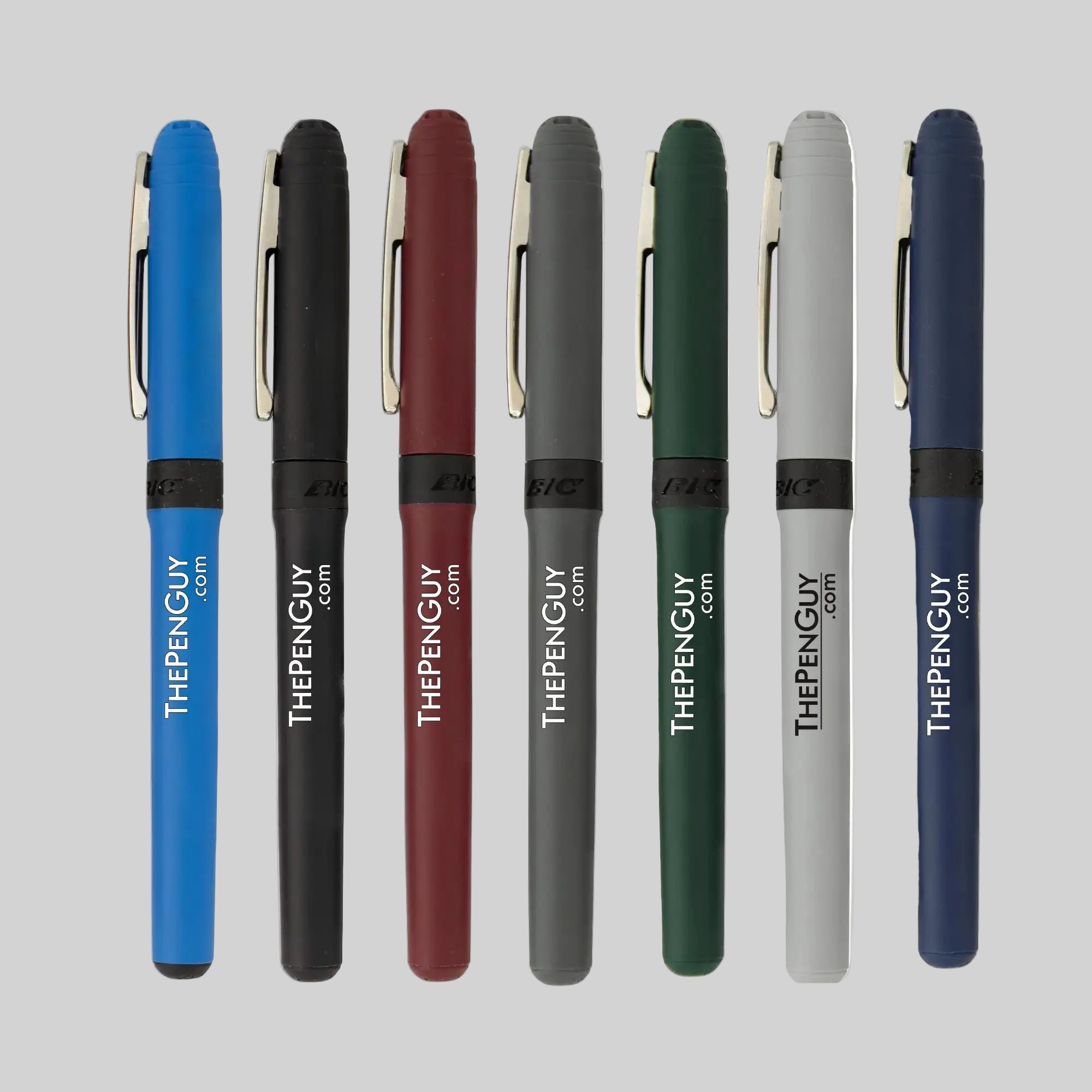
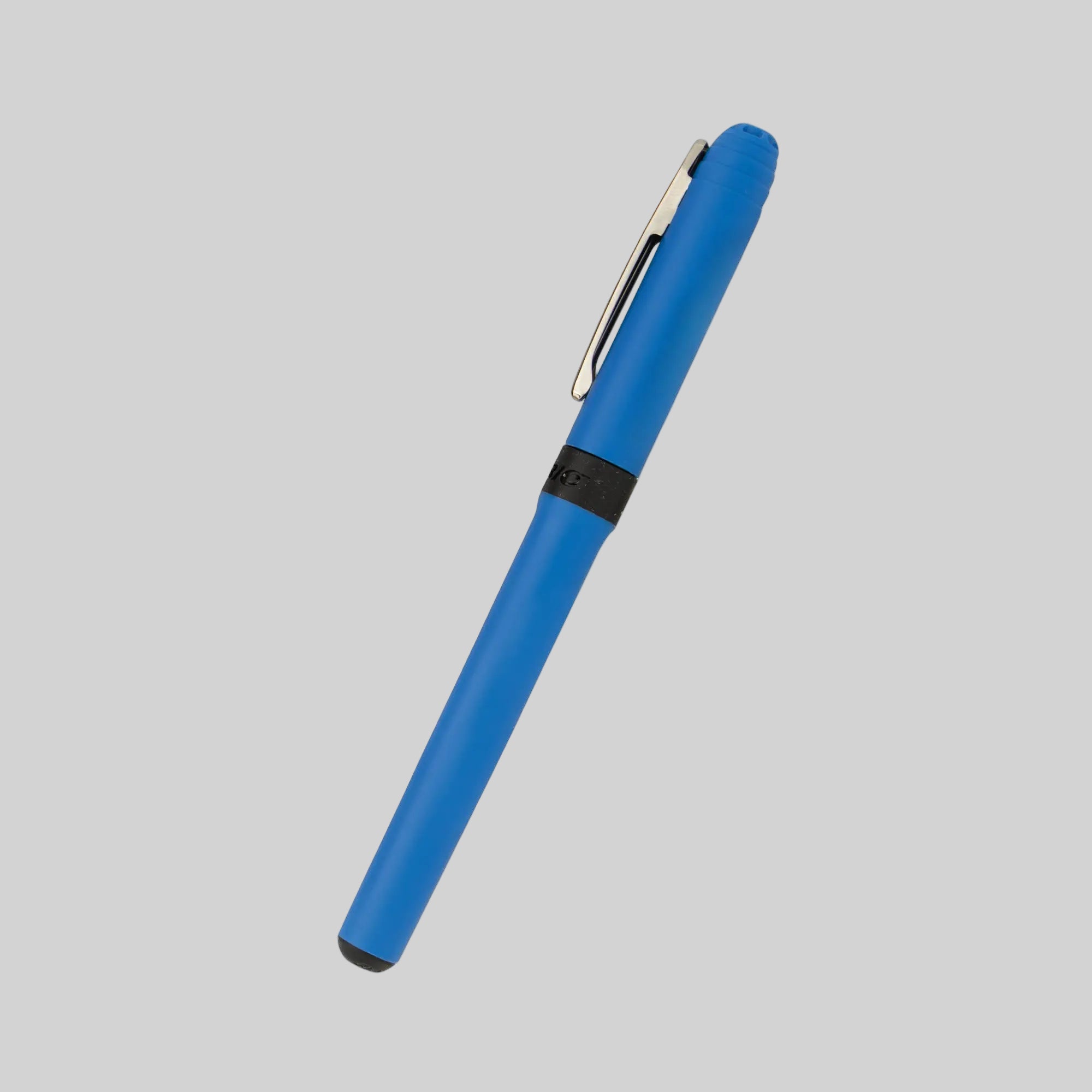
Your brand deserves to be on the pen they panic about losing. One of our bestselling pens that our customers raves about is our BIC® Intensity® Clic™ Gel Pen. The ultra-smooth gel ink flows consistently across paper surfaces, while the fraud-resistant ink formulation provides added security for important documents.
Quality gear sticks around longer than bargain bin items. While it may be tempting to cut corners on the cost per unit, the extra quality translates directly to how people perceive your business. Make sure your promotional items are the ones people want to keep, not throw away.
FAQs
Why does ink flow matter for a promotional pen?
A pen that feels scratchy or skips creates a negative user experience. This frustration can subconsciously transfer to the brand printed on the barrel. A smooth ink flow provides a satisfying writing experience, making the pen a preferred tool. This positive association reflects well on your company. A smooth pen is kept and used daily, maximizing your logo's visibility, while a poor-quality pen is quickly discarded.
Should I choose gel ink or a standard ballpoint for the smoothest feel?
While gel ink is known for being vibrant and smooth, it can sometimes smudge. Ballpoints are reliable and dry instantly but can require more pressure. A third option, hybrid ink, offers the best of both worlds. It combines the effortless glide of a gel pen with the quick-drying properties of a ballpoint. For maximum smoothness without the mess, ask for a hybrid or "low viscosity" ballpoint.
Do I have to buy expensive metal pens for a premium writing experience?
No. You can find plastic pens under a dollar that write better than some luxury metal ones. The smoothness comes from the ink cartridge and the ball bearing in the tip, not the casing. While metal provides a nice weight, you do not have to sacrifice writing quality if your budget is tight. Many budget-friendly plastic options feature advanced ink formulas.
How can I be sure the pens write smoothly before ordering 500 of them?
You should not buy bulk pens without testing them. Descriptions can say "ultra-smooth," but you need to feel it yourself. The smartest move is to request a sample. Most promotional product companies will send a sample of the specific model you are considering. Get the pen in your hand, write with it on different surfaces, and test its performance. This saves you from ordering a thousand pens that do not work well.
What tip size should I choose for the smoothest writing experience?
A broader tip generally feels smoother than a fine tip. A 1.0mm or 1.2mm tip, often called Medium or Broad, has a larger ball bearing that rolls easily and lays down more ink, lubricating its path. Fine tips, like 0.5mm or 0.7mm, are great for precise writing but can create more friction against the paper. If your main goal is a "buttery smooth" sensation, choose a Medium 1.0mm tip.